
My first trip to Katz's was as a tourist, there for the famous pastrami sandwich.
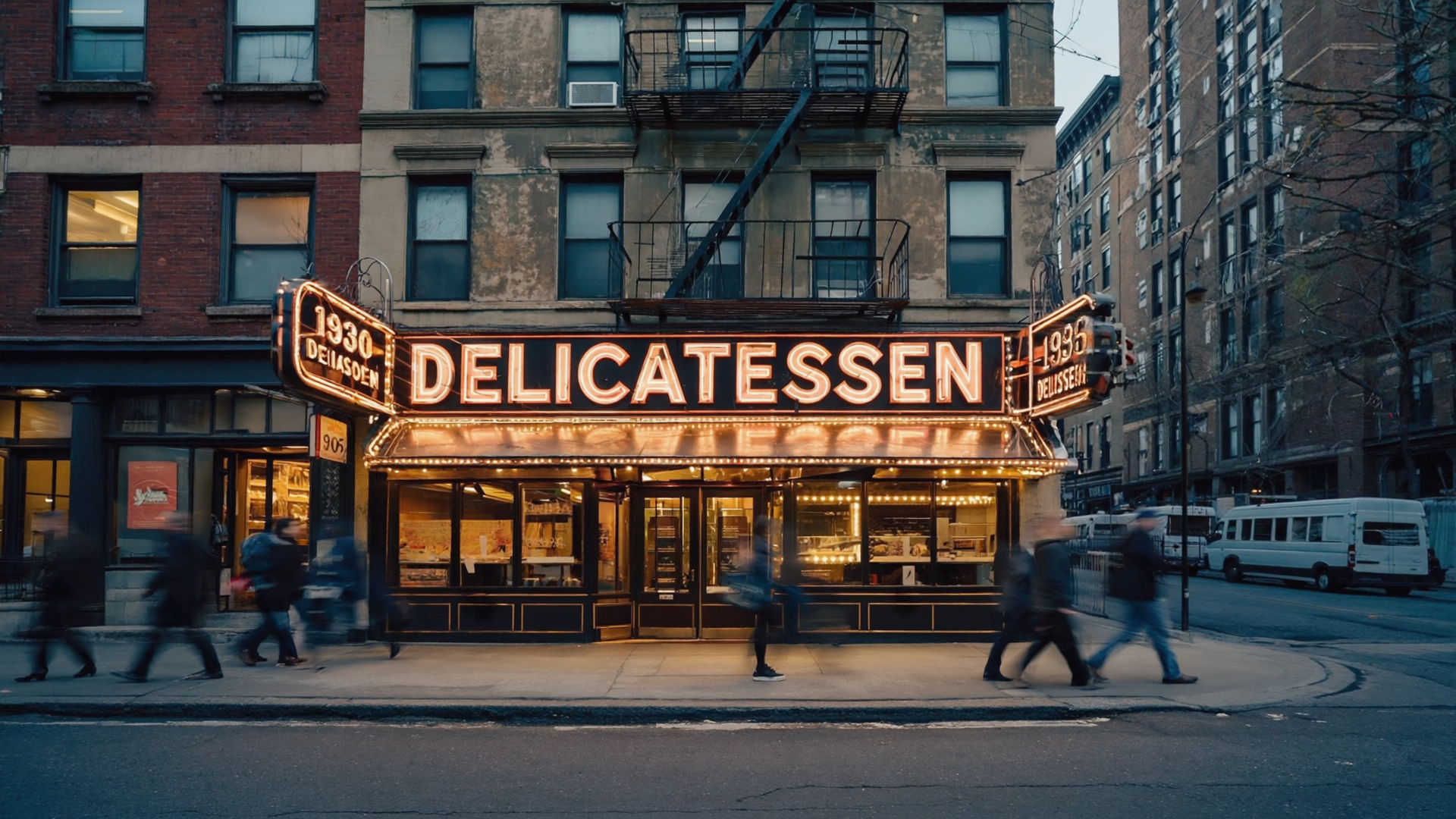
On the way back, I was strolling through a nearby park when a local woman stopped me. "How was it?" I said it was delicious, and she told me about other great spots—2nd Ave Deli, Sarge's. It got me thinking: I'd been seeing "Deli" and "Delicatessen" signs all over the city.
So I looked into NYC's deli culture.
The history of the deli—and the pastrami sandwich born in a new world
"Delicatessen" comes from German and means something like "delicious things." The tradition took off when large numbers of Eastern European Jewish immigrants began settling on Manhattan's Lower East Side in the 1880s. Sure enough, Katz's, 2nd Ave Deli, and other famous names are right in that area.
What I found interesting: the stacked, fatty pastrami sandwich that tourists love today isn't really a traditional Jewish dish—it's a new food culture that immigrants created in America. Back then, beef was cheap and plentiful in the U.S. in a way that was unthinkable in Europe. They used preservation techniques from Romania and Turkey to turn it into pastrami and corned beef and sold it. That's how it started.
Delis today
The 1930s were the golden age. New York had an estimated 3,000 delis—places where Jewish New Yorkers could gather, swap information, and do business.
These days, suburban migration, a focus on healthier eating, rising costs, and COVID-19 have taken a heavy toll. Legendary spots like Carnegie Deli and Stage Deli have closed; only around 30 delis are left.
My take
Brisket, corned beef, pastrami—all of it is really good.
Each place has its own style. Katz's does thick, fatty cuts and huge portions. 2nd Ave Deli is also generous, but the meat is sliced very thin, so it feels a bit lighter. For a big eater like me, a sandwich packed with nothing but meat is a dream either way.
I also learned about Kosher certification. It's a system that certifies restaurants that follow traditional Jewish dietary rules—with strict limits on how food is prepared and what can be served. One key rule: meat and dairy can't be served together. So 2nd Ave Deli has no cheesecake, and you don't get milk in your coffee after a meat meal. Cheese pizza without meat is fine; a cheeseburger isn't. Knowing a bit of this before you go changes how you read the menu and order.
Living in New York, you notice how the city is shaped by waves of immigration—Chinatown, Little Italy, Koreatown. Each neighborhood tells a different story. The deli is part of that story, and I'm glad I got to dig into it.
I'm planning to visit more delis and write them up in our restaurant column.